
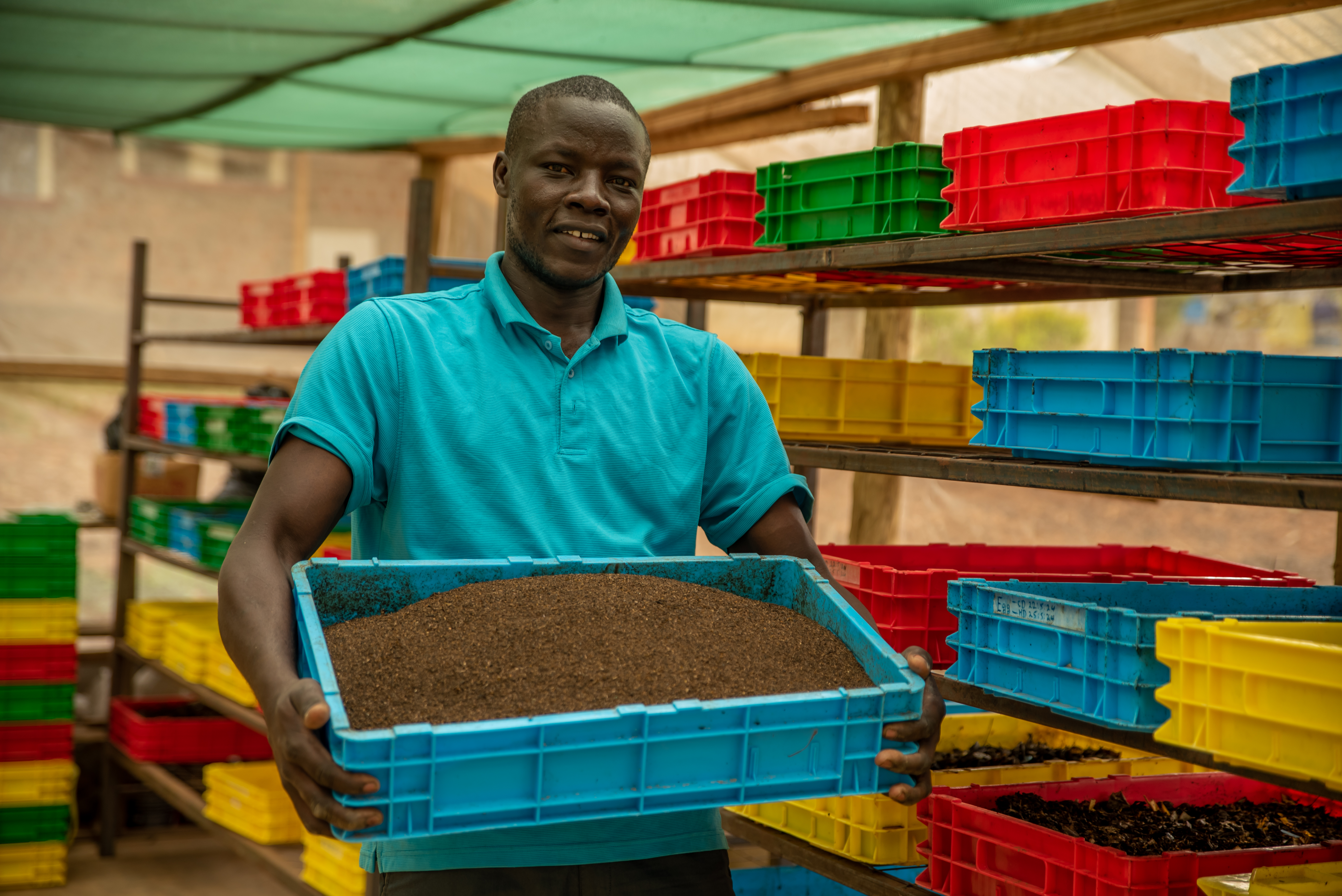
armers across Africa face rising feed costs, waste management challenges, and declining soil fertility. But what if there was a natural, low-cost solution? Enter the Black Soldier Fly (BSF)—a tiny insect with massive benefits for farmers.
The Black Soldier Fly (Hermetia illucens) is a remarkable insect species that has gained global attention for its exceptional ability to convert organic waste into high-value protein and fertilizer. Unlike common houseflies or fruit flies, BSFs are non-pest insects that don’t transmit diseases, bite humans, or invade homes. Native to tropical and subtropical regions, they have become a cornerstone of sustainable agriculture and circular economy systems worldwide.
At Justice And Mercy (JAM) Community Integrated Project, we’re empowering farmers with BSF farming training and technology to boost productivity, reduce waste, and increase profits—sustainably!
Black Soldier Fly (BSF) farming offers transformative solutions to some of the most pressing challenges facing African farmers today. One of its most significant advantages is providing affordable, high-quality animal feed. Conventional protein sources like soy and fishmeal have become increasingly expensive and environmentally unsustainable. BSF larvae present a cost-effective alternative, containing 40-60% protein that is ideal for poultry, fish (particularly tilapia and catfish), pigs, and dairy cows. By incorporating BSF into livestock diets, farmers can reduce feed costs by 30-50%, substantially improving their profit margins while maintaining optimal animal nutrition.
Another critical benefit is organic waste management. Farms across Africa generate substantial agricultural waste—from banana peels and maize husks to livestock manure—which often ends up polluting the environment. BSF larvae excel at bioconversion, rapidly breaking down organic matter into valuable products. In just 7-10 days, they can transform waste into protein-rich larvae for feed and nutrient-dense frass (insect manure) for fertilizer. This process not only clears farm waste but also reduces methane emissions from landfills, contributing to a cleaner, healthier environment.
BSF farming also creates multiple income streams for farmers. Beyond using larvae for their own livestock, they can sell dried BSF larvae to commercial feed producers, who value it as a sustainable protein source. The frass byproduct is equally marketable as an organic fertilizer, highly sought after by crop farmers for its ability to enhance soil fertility. Additionally, farmers can establish BSF breeding enterprises, capitalizing on the growing demand from the agribusiness sector. These diversified revenue opportunities make BSF farming a financially resilient venture.
From an ecological perspective, BSF farming promotes environmental sustainability on multiple fronts. It helps reduce overreliance on wild-caught fishmeal, thereby protecting vulnerable aquatic ecosystems from overfishing. The technology also curbs deforestation by decreasing the need to clear land for soy cultivation. Moreover, the application of BSF frass improves soil structure and fertility, reducing dependence on chemical fertilizers and fostering long-term agricultural productivity.
By addressing feed affordability, waste management, income generation, and ecological balance, BSF farming emerges as a holistic solution that aligns with Africa’s need for sustainable and profitable agricultural practices. For smallholder farmers looking to enhance their resilience against rising input costs and climate challenges, adopting BSF technology represents a practical, scalable, and future-proof approach to farming.
The Justice And Mercy (JAM) Community Integrated Project in partnership with ICIPE – International Centre of Insect Physiology and Ecology is playing a pivotal role in helping farmers adopt Black Soldier Fly (BSF) farming through a comprehensive support system. One of the key initiatives is training and capacity building, where JAM conducts hands-on workshops to equip farmers with essential skills. These workshops cover critical aspects such as BSF breeding techniques, optimal feeding strategies, and proper harvesting and processing methods for the larvae. By providing practical, field-based training, JAM ensures that farmers gain the confidence and knowledge needed to successfully implement BSF farming on their own.
To lower the barrier to entry, JAM supplies farmers with starter kits that include all the necessary materials to begin their BSF ventures. These kits typically contain BSF eggs or starter larvae, low-cost rearing bins, and easy-to-follow instruction manuals. This support allows even small-scale farmers with limited resources to start their BSF operations without significant upfront investment.
Beyond training and initial setup, JAM also facilitates market linkages to ensure farmers have a reliable outlet for their BSF products. The organization connects them with animal feed companies that purchase dried BSF larvae as a protein-rich feed ingredient, as well as organic fertilizer markets where they can sell nutrient-dense frass (the byproduct of BSF digestion). These market connections help farmers monetize their BSF operations, creating a sustainable income stream.
Additionally, JAM promotes community cooperatives to enhance the scalability and profitability of BSF farming. By encouraging farmers to work in groups, they can benefit from bulk purchasing of inputs, which reduces individual costs, and collective bargaining power when selling their products. This cooperative model not only strengthens the economic viability of BSF farming but also fosters knowledge sharing and mutual support among farmers.
Through these multifaceted efforts—training, starter kits, market access, and cooperative models—JAM is making BSF farming an accessible and profitable venture for farmers, while simultaneously addressing challenges like high feed costs, organic waste management, and sustainable agriculture. This holistic approach ensures long-term success and widespread adoption of BSF technology in farming communities.
As African farmers grapple with the triple challenges of soaring feed costs, mounting organic waste, and degrading soil fertility, Black Soldier Fly (BSF) farming emerges as a game-changing solution that addresses these issues simultaneously. This remarkable insect—nature’s ultimate recycler—transforms agricultural waste into high-value protein and organic fertilizer, creating a circular economy that benefits both farmers and the environment.
The impact of BSF technology extends far beyond simple waste management. By providing an affordable, protein-rich alternative to conventional feed, it liberates farmers from volatile feed markets while improving livestock productivity. Its ability to convert farm waste into valuable products tackles sanitation challenges while generating additional income streams through larvae sales and organic fertilizer production. Perhaps most importantly, it offers an environmentally sustainable model that reduces pressure on marine ecosystems, curbs deforestation, and revitalizes soil health—all while helping farmers build climate resilience.
African farmers grappling with soaring feed costs, waste accumulation, and soil degradation—challenges that threaten SDG 2 (Zero Hunger) and Kenya Vision 2030 agricultural goals—are finding transformative solutions in Black Soldier Fly (BSF) farming. This innovative approach tackles SDG 12 by converting 70% of organic waste into protein-rich feed (cutting import reliance by 40%) and SDG 13 by slashing methane emissions by 50% and reducing deforestation. It also advances Kenya’s climate-smart agriculture targets while creating youth-inclusive rural enterprises (SDG 8). Through JAM’s initiatives, BSF boosts farmer incomes (SDG 1) by lowering feed costs by 60%, enhances soil fertility with frass fertilizer (yield increases of 20-35%), and protects marine ecosystems by replacing wild-caught fishmeal. This circular economy model proves that ecological sustainability and economic growth can go hand-in-hand.
Through the pioneering work of Justice And Mercy (JAM) Community Integrated Project, this innovative solution is becoming increasingly accessible to African farmers. By providing comprehensive training, practical starter kits, crucial market linkages, and cooperative support systems, JAM is ensuring that BSF farming transitions from concept to widespread reality. Their holistic approach not only equips farmers with the tools for success but also creates an enabling ecosystem for sustainable agricultural transformation.
As we look to the future of African agriculture, BSF farming represents more than just an alternative practice—it embodies a paradigm shift toward circular, climate-smart farming systems. For farmers seeking to increase profitability while embracing sustainable methods, adopting BSF technology offers a practical pathway to food security, environmental stewardship, and economic empowerment. The partnership between nature’s ingenuity (through BSF) and human innovation (through initiatives like JAM’s) points toward a brighter, more sustainable future for African agriculture—one where waste becomes wealth, challenges become opportunities, and smallholder farmers become champions of ecological and economic resilience.
The revolution has begun. The question is no longer whether BSF farming works, but how quickly we can scale this solution to transform livelihoods across the continent. For forward-thinking farmers and agricultural stakeholders, the time to embrace this transformative technology is now.